


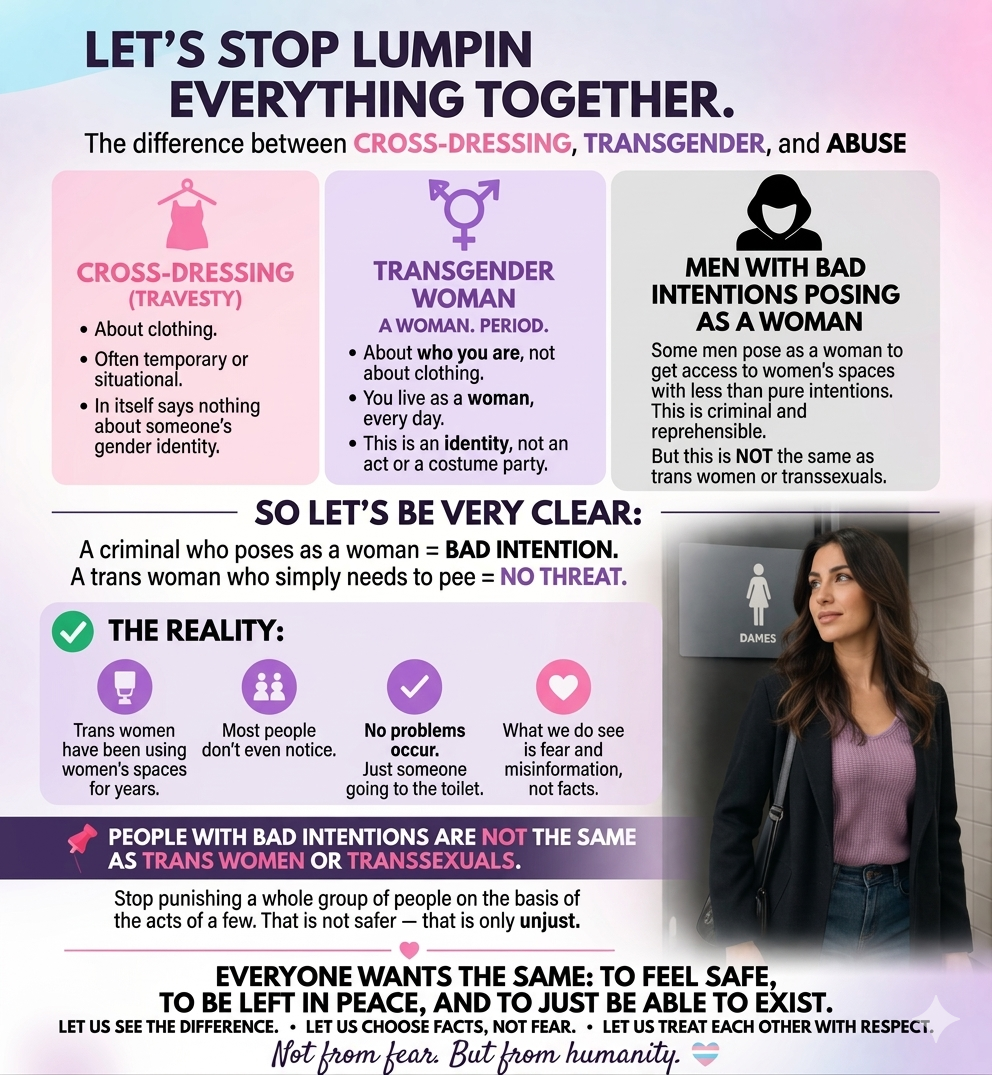
The Fundamental Distinction: Who is Who?
It is necessary to clearly distinguish between these groups to implement fair and effective policies that protect all citizens.
1. Cross-Dressing: The Art of Expression
Often referred to as transvestism in historical contexts, cross-dressing involves individuals who wear clothing traditionally associated with a different gender. This is frequently temporary, performative, or a form of artistic expression.
- Identity: A cross-dresser typically identifies with their assigned sex at birth. For them, the clothing is an outfit, not an internal identity.
- Context: It is about presentation and creativity. While a tiny minority may occasionally have harmful intentions, this must never be used to define or vilify the entire group.
2. Transgender Women: The Reality of Being
A transgender woman is a woman. Her identity is constant, deeply rooted, and intrinsic to her existence.
- Authenticity: This is not about a "costume" or a temporary role; it is about living an authentic life in every aspect, 24 hours a day, 7 days a week.
- Public Spaces: Transgender women have been using public facilities such as bathrooms and locker rooms responsibly and peacefully for decades without incident.
The Failure of U.S. Policy: Legislation Based on Misunderstanding
Currently, a wave of restrictive bills is sweeping across various U.S. states—ranging from healthcare bans to "bathroom bills." A significant portion of this legislation is rooted in a fundamental failure to understand the difference between gender identity and performative expression.
The "Costume" Fallacy
Many policymakers treat being transgender as if it were a choice or a "costume" that can be put on and taken off, similar to theatrical cross-dressing. By failing to recognize that transsexuality is an innate identity, they create laws that treat trans women as "men in disguise." This is not only scientifically inaccurate but also profoundly dehumanizing.
Weaponizing Confusion
The confusion between cross-dressers (who may dress for entertainment) and transgender women (who are simply living their lives) is being weaponized to stoke public fear. When politicians claim that "men will put on a dress to enter women's spaces," they are deliberately conflating two different groups to justify the exclusion and harassment of a vulnerable population.
The Consequences of Misinformation
When legislation is born out of fear rather than facts, the results are devastating:
- The "Dangerous Man" Caricature: This myth does a grave injustice to the millions of transgender people who simply wish to lead quiet, safe, and productive lives.
- Increased Vulnerability: By legally forcing trans women into male spaces, the government is actively placing them at a higher risk of harassment and physical violence.
- Erasure of Rights: Respect and understanding are the cornerstones of a democratic state; when these are ignored, the rights of all citizens are at risk.
Conclusion: Fear is not a legitimate basis for policy. Insight, education, and humanity are. It is time to acknowledge the facts: transgender rights are human rights, and they should not be sacrificed on the altar of political misunderstanding.

 English
 Dutch
Dutch